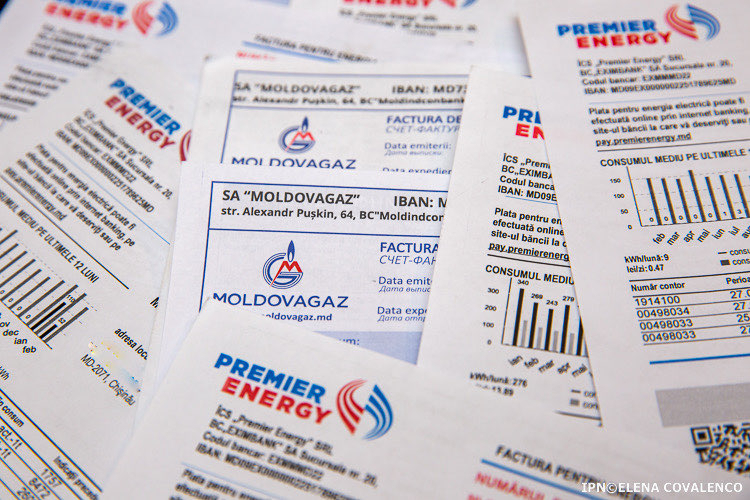
Providing financial assistance directly to beneficiaries' bank accounts for energy compensation, instead of applying discounts on bills, reflects a trend in the social policies of several European Union countries, where the importance of financial autonomy for improving the well-being of the population, especially vulnerable groups, is recognized. In a commentary on the advantages and risks of direct cash compensation, Rustam Romanciuc, a behavioral economics professor at MBS School of Business and associate expert at Expert-Grup, IPN reports.
The financial aid is intended to partially cover household expenses for natural gas, thermal energy, electricity, and solid fuels. Payments will be made directly to beneficiaries’ bank accounts or, when necessary, delivered to postal offices. According to the expert, there are concerns that some beneficiaries may spend the compensation on "tempting goods" (such as alcohol and tobacco), instead of using it for energy expenses. This could reduce the positive impact of direct compensation.
Rustam Romanciuc supports several studies in economics, based on data collected from randomized experiments, highlighting that cash payments provide greater autonomy for beneficiaries. This allows individuals to allocate funds according to their priorities, which often leads to an increase in "subjective well-being". Moreover, this form of assistance fosters greater flexibility, giving beneficiaries the freedom to decide how to spend the resources.
The author also mentions that in the case of energy compensation, there is a risk that beneficiaries will categorize the money received from authorities in a “mental account” separate from using it for energy expenses. Mental accounting is a concept in behavioral economics.
An important advantage of non-cash compensation is that it reduces temptation spending. However, this approach has limitations: providing restrictive aid can create a sense of powerlessness and even stigmatization among beneficiaries. In some cases, beneficiaries may perceive this assistance as paternalistic, as it limits their freedom of choice. Additionally, a disadvantage of non-cash aid is the lack of liquidity, which can create difficulties in covering urgent, unforeseen costs.
The expert concludes that implementing compensation in the form of cash directly into beneficiaries' accounts can offer flexible support tailored to each individual's needs. The autonomy provided by this system can lead to improvements in both the psychological and financial well-being of beneficiaries, especially for vulnerable groups who feel the need for control over their own economic decisions.
To maximize the efficiency of this policy, the expert recommends that the government explain the purpose of the compensation and emphasize the importance of using it for energy expenses, while monitoring the use of the funds. Furthermore, directing energy compensation to women could enhance the policy’s effectiveness: Duflo’s study shows that when women are the direct beneficiaries of financial aid, they tend to prioritize spending on the well-being of the household. According to Rustam Romanciuc, this finding suggests that within the energy compensation policy, allocating funds to women ensures responsible spending and attention to the family’s basic needs.