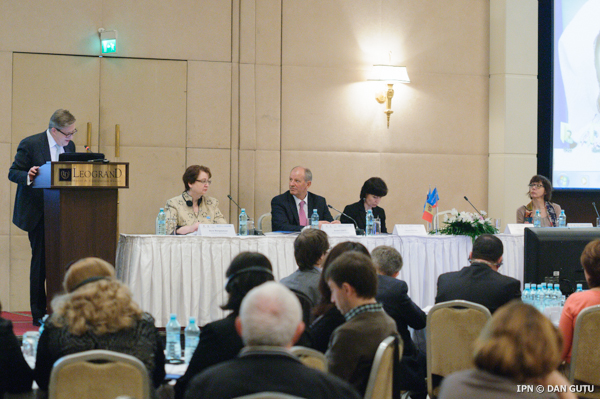
Only 9% of households in rural areas use flush toilets compared to 75% in urban areas. Improved sources of drinking water are available to 86% of the population. These are the results of the Multiple Indicator Cluster Survey (MICS), which monitors the situation of children and women in Moldova. They were presented by UNICEF and the Ministry of Health in Chisinau on April 17, IPN reports.
According to the study, every fifth child has at least one migrant biological parent. Violent discipline is present in most families — 75% of children aged 2–14 years are subjected to physical punishment or psychological aggression. However, the situation in health has improved compared to 2005. Minister of Health Andrei Usatyi told a news conference that at present 21% of children suffer from anemia, compared to 32% seven years ago. Anemia in pregnant women has almost halved — from 40% in 2005 to 26% in 2012.
The levels of general vaccination of children remain high — 89%, especially in the rural areas. Six per cent of children are stunted (they are short for their age due to chronic malnutrition) compared to 8% in 2005, but the discrepancies are high — children from the poorest families are affected by stunting nearly four times more than children from the richest families.
According to Nuné Mangasaryan, UNICEF Representative in Moldova, MICS results show that Moldova has made remarkable progress in many areas, such as health, education and nutrition. Still discrepancies remain. “We hope that the recent disaggregated data obtained through MICS will help the Government of Moldova and partners to focus efforts and address disparities reaching the most vulnerable families with children,” she added.
The survey was conducted in Moldova in 2012 on a national representative sample of 12,000 households, women and men aged 15–49 years, as well as children and youth.