The Moldovans more seldom complain about illegal arrests to the European Court of Human Rights (ECHR). The complaints about ill-treatment and violation of the freedom of expression and assembly almost disappeared. The Moldovans now complain more about the way in which judges decide to provide compensation for the violation of the reasonable timeframe for a trial.
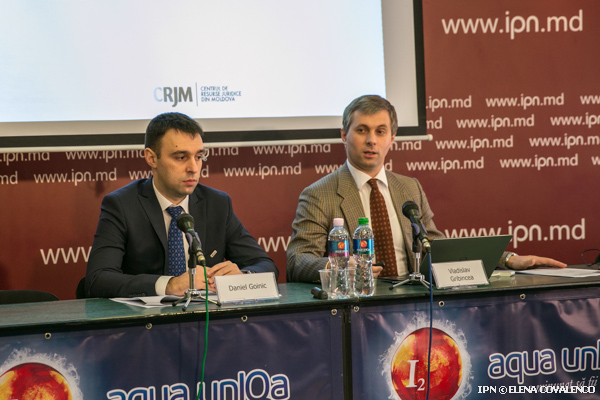
Head of the Legal Resources Center of Moldova Vladislav Gribincea, in a news conference at IPN, said the Moldovans more rarely complain about arrests, even if national statistics show that the number of arrests is on the rise. The explanation is that the number of arrests is higher, but these are shorter. “Until the person compiles the application to the Court, this is set free and gives up as the process implies effort, nerves and potentially money,” he stated.
The complaints about cases of maltreatment are also fewer. Up to ten such applications a year were submitted earlier, but now there are filed at most two. According to Vladislav Gribincea, the complaints about the freedom of expression and assembly have also disappeared.
Instead, there are more complaints about the fact that the Moldovan judges do not set generous compensations. “If the compensations are insufficient at national level, one can go to the ECHR. In 2017, the ECHR accepted over 60 applications by which persons complained that they filed for compensations at the national level over violation of the reasonable timeframe, but the judge awards a lower amount than they expected,” stated the jurist.
Another group of applications filed by Moldovans to the ECHR refer to the illegal quashing of court judgments. It is about cases when a judgment by the Supreme Court of Justice, which cannot be reviewed according to norms, is classed as an exception and retried. Also, many of the complaints refer to the respect for the private life, home searches and tapping of phone conversations, stated Vladislav Gribincea.
Since 1998 until 2017, the ECHR had logged over 13,400 applications filed against Moldova. On December 31, 1,348 of these (10.1%) were pending. By December 2017, the ECHR passed 354 judgments on Moldovan cases, 16 of which last year, by seven fewer than in 2016.