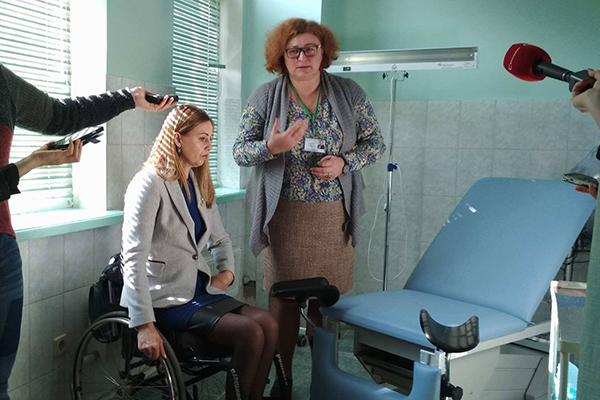
Thirty youth-friendly health centers of Moldova were outfitted with adjusted medical equipment for women and girls with reduced mobility. The initiative was presented at the Chisinau Center “Neovita” on October 18. The event was held in connection with the launch of the State of World Population 2017 Report and was organized by UNFPA Moldova, the Swiss Cooperation Office in Moldova, the Ministry of Health, Labor and Social Protection in concert with “Neovita” and the public association “Motivatie”, IPN reports.
Minister of Health Stela Grigoras said this initiative is significant for developing the health system. “I want to assure you that the Ministry’s goal is to work hard to ensure your right to have access to improved medical and social services, including to services and programs related to sexual and reproductive health,” she stated.
UN Resident Coordinator Dafina Gercheva said this subject is topical in Moldova and other states that pledged to achieve the 17 sustainable development goals that aim to reduce inequalities, with emphasis on those in need.
UNFPA Representative to Moldova Rita Columbia noted that each person faced inequality at least once, but the young people, girls and women from poor families, the rural population and those with disabilities suffer the most from economic or social inequalities. The initiative presented today should serve as an example that would be a norm, not an exception.
The medical equipment was purchased and installed with the support of the Government of Switzerland. The representative of the Swiss Cooperation Office in Moldova Simone Giger said that small, but important steps were taken through this project to recognize and ensure the sexual and reproductive rights of girls and women with disabilities in Moldova. By providing the 30 centers with adjusted gynecological examination chairs, basic conditions were created for ensuring access to gynecological care.
“Motivatie” projects manager Ludmila Iachim said the adjusted chairs ensure greater flexibility and the women with reduced mobility can use these by themselves, without the assistance of health professionals. “The women with disabilities are thrice discriminated. We are women, have disabilities, but want to be mothers. Even if this is our right, we have to prove it,” she stated.
The State of World Population 2017 Report launched by the UNFPA globally on October 17 shows ten of the most equal 25 countries are in Central and Eastern Europe and Moldova is among them. However, there are big discrepancies between countries and inside them. For example, Moldova is among the 28 countries where the rate of specialized medical care at birth is of 100%. On the other hand, Moldova lags much behind in preventing maternal mortality and teenage pregnancies and in ensuring access to modern contraception methods.