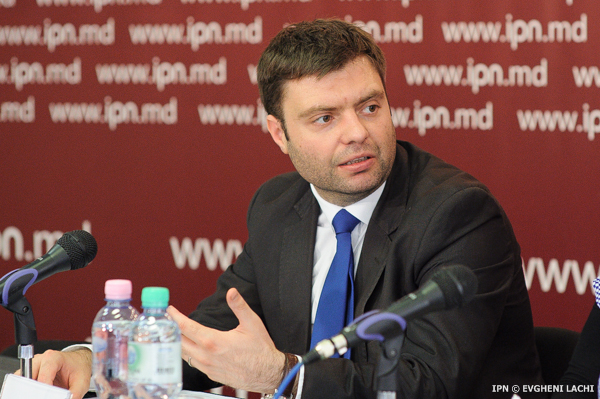
When a detainee complains that he is threatened and that his life is in danger, a special protection measure should be taken, as provided by the Execution Code, namely isolation, said Ion Guzun, adviser at the Legal Resources Center. In an interview for Radio Free Europe, the expert said that in such conditions, particular emergency warning mechanisms must be established and the person must be supervised nonstop. Other security measures are decided by the prison’s administration at internal level, IPN reports.
“The first measure that the jail’s administration must take is to isolate the person who is in danger. The penitentiary’s administration must react promptly to protect the life and health of the person exposed to risks,” noted Ion Guzun.
As regards the request of ex-Premier Vlad Filat’s lawyer to offer his client detention conditions that will be compatible with his status, Ion Guzun said it’s reasonable for a person who is transferred from good conditions to very bad conditions, as those in Penitentiary No. 13, to ask for this. But better conditions cannot be ensured only for particular persons as Penitentiary No. 13 is overcrowded and the conditions there are very bad, except for two-three cells.
Asked if a detainee who held or holds a public post is more vulnerable compared with other prisoners, Ion Guzun said that these are vulnerable as regards their physical integrity. According to him, the former police officers and prosecutors or persons who occupied other public posts are held separately from convicts who didn’t serve in the law enforcement bodies because these are usually intimidated and have different relations with convicts who obey the so-called criminal sub-culture with particular hierarchies.
The adviser also said that regardless of the status of the persons held at Penitentiary No. 13, the detention conditions there can be indeed considered as bad treatment.