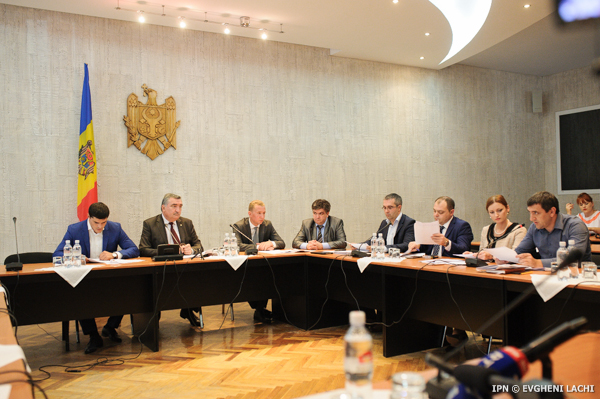
Both national broadcasters and civil society insist that the MPs should not adopt two bills designed to secure the media space and combat propaganda and to stimulate local production of audiovisual works, IPN reports.
In the public debates held by the parliamentary commission on mass media, these argued that the proposed amendments can lead to the disappearance of some of the independent broadcasters that exist on the market owing to the advertisements they attract by broadcasting foreign programs.
Two relevant proposals were submitted to Parliament: one by the Liberals and another one by a group of Liberal-Democratic and Democratic lawmakers. After these bills were registered, criticism started to be leveled as them for the reason that they represent censorship instruments and are aimed at liquidating the inconvenient broadcasters. In reaction, Speaker Andrian Candu transmitted the bill to the Council of Europe, the OSCE and Freedom House for appraisal. The expert opinions of the Council of Europe and the OSCE, provided recently, warn that some of the provisions may easily amount to censorship and recommend stimulating the local production of audiovisual works as a method of combating propaganda, not yet banning some of the TV and radio stations.
Nadine Gogu, director of the Independent Journalism Center, said the measure to increase local audiovisual production looks now like constraint, not stimulation. “If the given law is adopted, the Broadcasting Coordination Council won’t be so tolerant. What will happen to the independent broadcasters that do not have sponsors behind? We must be sure that the given amendments will not lead to the disappearance of independent broadcasters,” she stated.
BCC member Olga Gurtutui suggested waiting for the appraisal of the Freedom House so as to review particular provisions afterward.
Lorena Bogza, producer at Pro TV Chisinau channel, said it’s not right to treat the security of the media space and the augmentation of national audiovisual production as equal matters. She called on the lawmakers to withdraw these bills and to propose a bill that refers strictly to media security. “Now Pro TV should close some of its popular programs and should replace them with programs of a poorer quality. Why should we prevent the Moldovan TV viewers form watching the programs they want?” she asked, saying the TV channel she represents survives only on the attracted advertisements.
BCC chairman Dinu Ciocan noted that the sanctions existing now in the broadcasting sector cannot make the broadcasters seriously fulfill their obligations. For the situation to change, the Audiovisual Code of the Republic of Moldova must be amended.
More public debates on the two bills will be yet held.