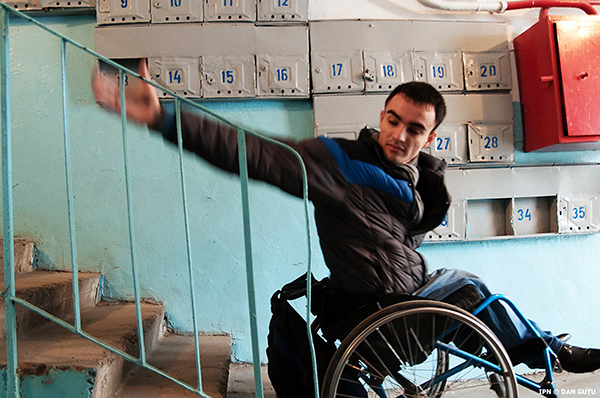
The central authorities must create a series of conditions and adopt a number of amendments to the legislation in order to ensure disabled people’s access to the electoral process. Such a conclusion was reached by experts who made a study within the Supporting Civic Coalition for Free and Fair Elections in Promoting Principles of Free and Fair Elections Project, IPN reports.
Presenting the study, Ludmila Ciocan, project expert and author of the study, said the national legislation does not limit or hinder the participation of the people with sensory or locomotor disabilities in the political life. But the Electoral Code contains provisions that deprive the persons with intellectual and psychosocial disabilities of the right to vote. The author considers the Central Election Commission must review the legislation and submit proposals for amending these provisions to Parliament.
According to Ludmila Ciocan, the fact that the voter is accompanied in the poling booth represents violation of the right to secret vote. But, as there is no appropriate equipment, such as electronic voting devices with tactile screen, assisted voting remains the only voting option of the persons who do not have legs or hands or had them amputated, or are paralyzed. In the case of voters with other kinds of disabilities, such as hearing impairments, it is preferable to use alternative voting methods, such as audio instructions and aids labeled in Braille.
Also, there are no regulations or instructions to define criteria and standards as regards the accessibility of these persons to polling places.
Ludmila Ciocan said that quantitative and qualitative analyses are needed for drafting policies and documents concerning the accessibility of persons with disabilities to the electoral process. Mass media representatives must be trained to provide accessible information for this category of people and training programs should be designed for electoral functionaries.