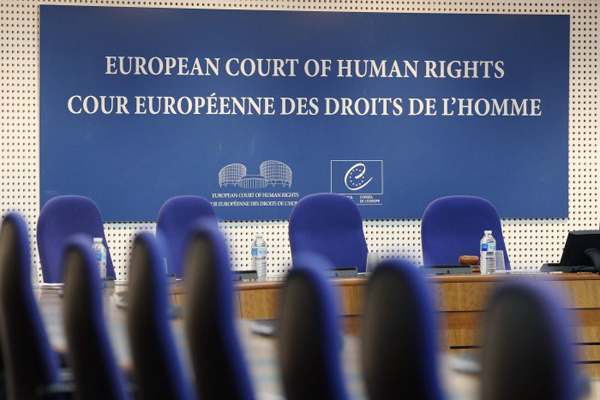
The Grand Chamber of the European Court of Human Rights (ECHR) on February 4 examines the case of Mozer versus Moldova and Russia. The applicant - Boris Mozer - is a young man from the Transnistrian region who was jailed and held in deplorable conditions.
The case was made public in a press club meeting staged by Promo-LEX Association, IPN reports. The Association’s director Ion Manole related that in 2008 the young man was abducted and held for two days by the guard service of the private company for which he worked, being accused of causing damage of US$40,000 to the company. Boris Mozer was forced to accept blame and his parents were blackmailed into paying the US$40,000 so that they were allowed to pass on asthma medications to their son. After his parents borrowed and paid the US$40,000, the company’s employees asked another US$40,000. The family then sought help from the embassies and international organizations working in Moldova.
Following these approaches, the young man was handed over to the illegal law enforcement bodies of Transnistria, which held him in inhuman conditions for almost two years. Promo-LEX complained to the ECHR. When the case was communicated to the Governments of Moldova and Russia, the young man was placed under house arrest. As he needed medical care, he came to Chisinau and refused to return to Tiraspol. Now his parents cannot return home either as they possess information that the Transnistrian administration intends to arrest them.
Ion Manole spoke about the situation in the Transnistrian region, noting that the conditions in all the penitentiaries there are disastrous. The detainees do not have access to medical assistance. Only their relatives can transmit medicines to them. Information about the death rate in jails is not made public. The constitutional authorities could reach an agreement with the separatist authorities so that they provide at least medical care to the prisoners from the region.
Vlad Gribincea, director of the Legal Resources Center, said this case will set a precedent for the ECHR, noting it is examined by the Grand Chamber, which deals with the most important cases. In general, this case will show the High Court’s opinion on the detention conditions in Transnistria.
The ECHR will not pass judgment immediately. The decision can be published even in a year.
Moldova is accused of not taking all the necessary measures to ensure the protection of human rights in the region, while Russia – of financially and militarily supporting the separatist regime in Transnistria.