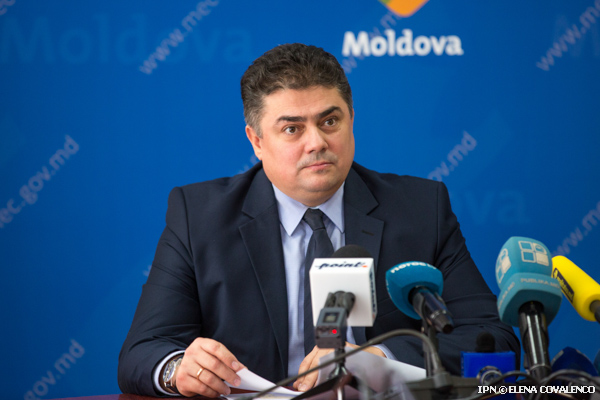
The draft agreement on the functioning of the Dnestrovsk/Nistrean hydroelectric complex, which has been on the Moldovan-Ukrainian agenda for over eight years, was discussed in Kyiv on December 5. The environmental aspect on which Moldova insists hasn’t been yet clarified, stated Deputy Prime Minister Octavian Calmic, Minister of Economy and Infrastructure, IPN reports.
Octavian Calmic told a news conference that ten days ago Prime Minister Pavel Filip had a meeting with his Ukrainian counterpart Volodimir Groisman in Tbilisi. The two agreed a series of activities to hasten the solving of problematic aspects of the bilateral relations. In this connection, a team of Moldovan experts went to Kyiv to discuss the draft agreement on the functioning of the Nistrean hydroelectric complex.
According to the Deputy Prime Minister, Moldova insists on ensuring a minimum flow of water after this barrage so as to maintain the ecosystem of the Nistru River and to ensure the municipality of Chisinau and other communities and farmers as well with high-quality water. The discussions continue to reach a compromise that is now more likely.
Octavian Calmic also said that in Kyiv there was finalized the common address of the Prime Ministers of Moldova and Ukraine to the European Commission for carrying out a study of the environmental impact on the whole Nistru, including at critical points, not only in Dnestrovsk. The sides will continue the discussions and will then agree a high-level meeting to deal with the problematic aspects.
Besides the hydropower plant in Dnestrovsk that was built in 1983, Ukraine also opened two more plans, one in 2000 and another one in 2009. Moldovan researchers said the flow capacity of the Nistru decreased by almost 2/3 as a result. Also, precious fish species disappeared from the river. Ukraine plans to build another six mini-hydroelectric plants. Experts say the largest part of Moldova and Odessa region risk remaining without drinking water.