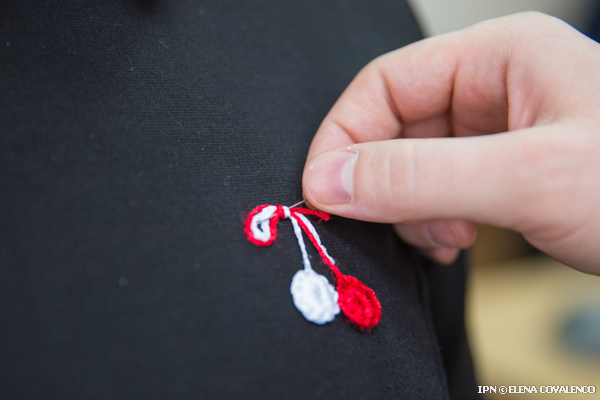
The white color of the martsishor is associated with snow and means masculinity and wisdom of men. The red color is associated with fire and blood and means femininity, sensuality, love and joy of life. The two-color string of the martsishor means the exchange of forces and combination of femininity and masculinity and warmth and cold to create a perfect symbol and balance.
Contacted by IPN, Natalia Gradinaru, head of the General Ethnographic Issues Division of the Academy of Sciences of Moldova, said that according to legends, the thread of the martsishor was woven by Baba Dochia while she was driving the flock of sheep to the mountains. Like the Fates that determined the course of a child’s life at birth, Dochia wove the course of the year with the 366 days. Some myths about the martsishor depict the scenario of the struggle between two forces that ends with the victory of the good over the evil, with serious wounding of the hero whose blood dripped onto the white snow. They say that to commemorate those deeds, the people started to give interwoven red and white threads to each other as a present.
By tradition, the martsishor has the power to defend the wearer from disease and unfavorable events and brings luck, beauty and youth, symbolizing the passing from winter to summer, from cold to warmth, from darkness to the light, from sterility to fertility, while the two-color string means the combination of winter and spring.
In the past, the women were banned from working with wool on March 1 as they could have infuriated Baba Dochia, who could have punished them by prolonging winter. The women cooked borsch with nettle and also popcorn on stove fire for children.
Currently, the people offer martsishors as a present to show their admiration for parents and friends and in respect and special esteem for teachers, as a symbol of their love for the partner, etc. When giving the amulet, they also wish health, love and good luck to the close ones. The martsishor is worn until the end of March and on April 1 is put on the branch of a tree to bring welfare. The wearer should make a wish and this will definitely come true, said ethnographer Natalia Gradinaru