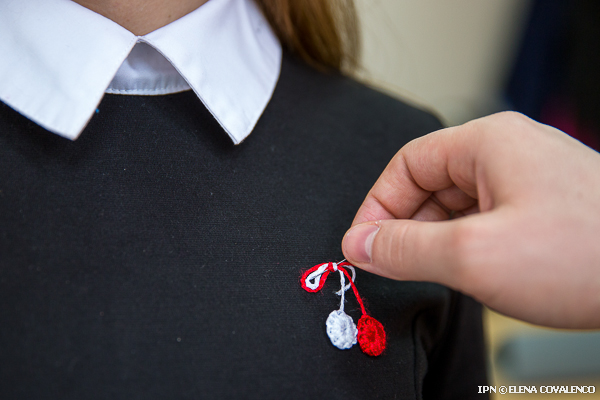
The tradition of giving each other martsishors on March 1 is very old, being typical for the Romanians from Moldova and for Bulgarians, Greek people, a part of the Croatians and a part of the Hungarians, which is those who lived closer to the Romanian territories. Given that all these peoples speak different languages, it is normal that the custom does not come from the epicenter of one people. It is rather an old tradition of the Thracians that was perpetuated, folklorist Varvara Buzila has told IPN.
The old martsishor is the one that was formed by interweaving two threads of wool, a red and a white one. Varvara Buzila said it’s not true that fewer people wear martsishors now. This symbol can be worn at the neck, hand or leg, as the elderly people did in the past, and is thus not in sight. To draw conclusions, all these wearing methods should be taken into account. “The martsishor is not like a hat put on the head and everyone sees it from a distance,” said the folklorist, adding that not many people make yet martsishors themselves to give them as presents and most of the people buy these.
In the past, the martsishor was worn at the neck, leg or hand in order to protect oneself from evil and this became thus a talisman. At end-March, when the first trees started to bloom, the people tied the martsishor they wore to a tree branch. This ritual was never mute. “Those from the south waited for the cranes to come and when they saw these they said: Take blackness and bring whiteness. Then they put the martsishor under a stone or the branches of a rose bush with the wish to be as beautiful as the flower or to have the residence of the stone from now on. All these methods of transferring the martsishor to nature actually meant the end of its circulation in nature,” stated Varvara Buzila.
According to tradition, on the first day of spring they people also do the general cleaning in the house and the yard. In the past, each member of the family had separate responsibilities. The girls and women worked in the home, while the men in the garden, yard and the street. When the general cleanup was over, the elderly people prepared popcorn for everyone. “Many people forgot that March 1 is the general cleanup day. The mayors, local public authorities should rethink the practices related to the martsishor and should lay emphasis on general cleanup. There are also known expressions like “March in the house and fleas out”,” concluded the folklorist.
The martsishors are worn throughout March.