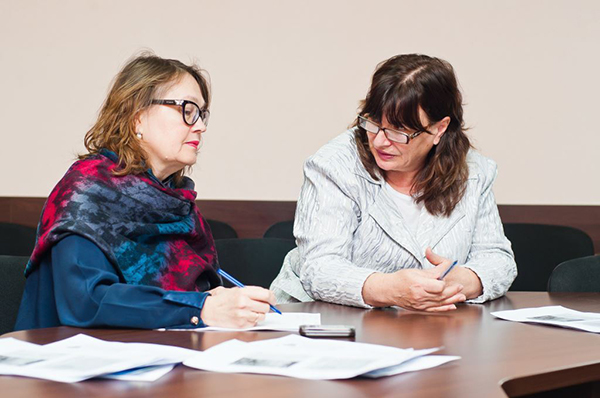
The women in Sangerei town were trained to start sustainable businesses. The goal was to empower the women and encourage them to take an equal part in activities to strengthen resilience to climate change, including to teach them resilient agricultural practices. The training formed part of the project “Supporting Moldova’s National Climate Change Adaptation Planning Process”, which aims to create a long and medium-term adjustment system, IPN reports.
Vera Brashovschi, local specialist in business administration, reached the conclusion that it is hard for the women to start a business. Among the biggest challenges is the human factor as the women, especially at community level, are afraid to initiate a business. Traditionally, the women in Moldova are marginalized in activities in the sphere of social services. These jobs are the worst-paid in Moldova not by coincidence. The women win by about 12% less than the men.
Through this scheme of grants intended for the implementation at the local level of innovative measures to adjust to climate change, resources are allocated for staging training seminars for women. Within these activities, Vera Brashovschi implemented the pilot-project “Green energy for entrepreneurial activities” and offered consultancy and support to persons in funds management and raising, etc. “Owing to the grant, we provided consultancy to 17 entrepreneurs, including 12 women and five men. 80% of these women are from vulnerable families that needed powerful social, financial and administrative support,” stated Vera Brashovschi.
Valentina Bodrug-Lungu, local expert in gender equality, said the women in Moldova, as in other countries, obtained considerable knowledge of agriculture. Respectively, they are not simply victims of the impact of climate change, but active agents of development. From this perspective, the socioeconomic empowerment of women means empowerment of the whole community.
The project “Supporting Moldova’s National Climate Change Adaptation Planning Process” is supported financially by the Austrian Development Cooperation and the Federal Ministry of Agriculture, Forestry, Environment and Water Management of Austria with the support of UNDP Moldova. It is implemented by the Climate Change Office of the Ministry of Environment of Moldova.