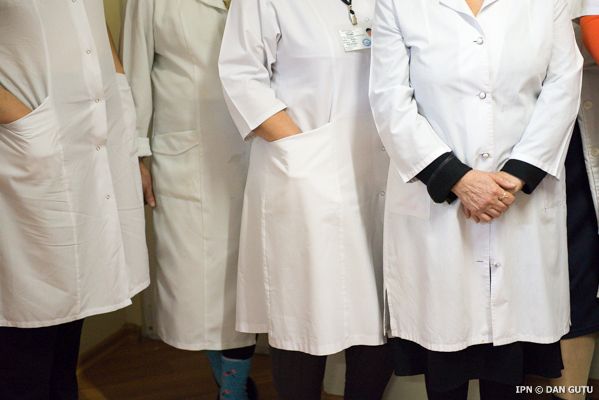
As many as 140 patients in Moldovan hospitals last year underwent 82 clinical trials approved by the Ministry of Health. 72% of the cases referred to bioequivalence studies concerning the confirmation of aspects in the administration of drugs. The clinical tests were done in 10 medical-sanitary institutions that have authorizations for such trials, IPN reports.
Minister of Health Andrei Usatyi told a news conference that the clinical trails are multicentre, which is they are carried out simultaneously in a number of countries. The same number of people are involved in them and the results are discussed by specialists in the field.
Healthy persons took part in the clinical bioequivalence studies in Moldova. The other treatment and post-treatment studies involved 140 persons diagnosed with hepatitis C, rheumatic arthritis, prostatic cancer and other disease on a voluntary basis. Andrei Usatyi assured that there were committed no deviations and the patients didn’t suffer side effects. All the persons involved in the tests gave their consent in written form and had several days to change their mind. The clinical trials are done only by persons who are doctors of medicine and have a wide experience in the field.
The minister said the benefits of clinical tests are multilateral. The institution that does them levies charges for allowing to use its areas for the purpose. For example, the National Clinical Hospital in 2011-2012 obtained 4.4 million lei. The money was used to modernize the institution. In other institutions, 72 million lei obtained from clinical trials went to purchase innovative drugs, etc. The doctors of such institutions are also remunerated.
Andrei Usatyi also said that the clinical trials bring benefits to patients too. They do laboratory tests free of charge and benefit from gratis expensive drugs. They are also offered financial support.
The minister added that Moldova becomes more attractive for international pharmaceutical companies in terms of clinical trials as it inherited a complex health system with multiple specialties and with skilled specialists. The number of trials rose from 10 in 2000 to 82 in 2013. Even so, Moldova comes last in the international rankings, alongside Bulgaria with 78 studies.