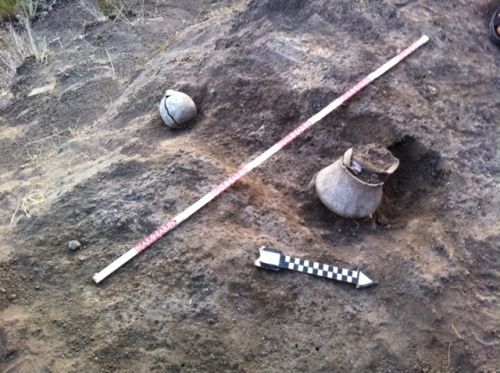
Several oriental coins dated to the 14th century, Moldovan coins from the 15th century and an Austrian dinar from the 17th century were found by archaeologists digging in the area of Orheiul Vechi.
The excavations are done in the natural-cultural reservation Orheiul Vechi. The area contains archaeological monuments from all the known ages, from the Stone Age to the late Middle Ages to modern settlements. Valeriu Pasa, the reservation's director, told Info-Prim Neo that the main monument is the medieval city founded by the Tatar Mongols in 1338.
“Besides coins, we have found part of a camel’s skeleton. Camels came here with caravans from China and the Arab countries. We have discovered pots made by craftsmen following the tradition and styles of Central Asia and ceramic pots specific for the period of (medieval rulers) Alexandru cel Bun and Stefan cel Mare”, said Valeriu Pasa.
The archaeological excavation efforts are supervised by Deputy Minister of Culture Gheorghe Postica. An open-air museum is planned to be organized in the area. Nearby, the walls of a medieval church, a palace, a citadel and other old buildings have been discovered. The objects found by the archaeological team will be kept at the reservation museum.
The natural-cultural reservation Orheiul Vechi was created in December 2008, after the Parliament adopted a law on the protection and conservation of the Orheiul Vechi cultural landscape, the historical and cultural monuments in the area, the Raut River gorge landscape, the micro-zone of Trebujeni, Butuceni and Morovaia villages in the Orhei district, which bear an exceptional historical and scientific value for the national and international culture.