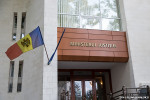
Moldova’s Parliament is perceived by the population as the institution that is most affected by corruption (76% of those polled). In the neighboring country Ukraine, this indicator stands at 64%. The presidential institution and Government of Moldova are perceived as such by 71% of the respondents (60% in Ukraine), while the legal system – by 67% (61% in Ukraine). The data were presented in Berlin by Transparency International, which launched the Europe and Central Asia 2016 Global Corruption Barometer, IPN reports.
For the public opinion poll about people’s experiences and perceptions of corruption in 42 countries in Europe and Central Asia, Transparency International spoke to nearly 60,000 respondents across the region. The situation is worrisome in Moldova and Ukraine, which signed Association Agreements with the EU. In the rankings of the 42 countries, the people are most concerned about the spread of corruption in Moldova (67% of the respondents) and in Ukraine (56% of the respondents). 84% of those surveyed in Moldova and 86% of those polled in Ukraine said their governments had failed to curb corruption, with 79% of the respondents considering the influence of private (oligarchic) interest on the decision-making process is very big.
Asked if they paid a bribe during the last 12 months in at least one of the surveyed institutions/areas (police, judiciary, health protection, education and other services), 42% of those polled in Moldova answered affirmatively. This indicator is the highest in the region, the next highest rates being in Ukraine and Azerbaijan, by 38%. As earlier, corruption is most spread in education (55% of those who used services of education institutions paid a bribe), health protection (42%) and the police (39%). Only 38% of the respondents in Moldova consider the ordinary people can generate evident changes in the country.
“Corruption is a significant problem all across the Europe and Central Asia region. “By their very positions at the top of the power pyramid, corrupt elites and oligarchs are hard to remove. But we have seen that it can be done if people stand together to demand higher standards from their leaders and the judiciary acts independently to hold them to account,” said José Ugaz, Chair of Transparency International.
The general conclusions of the study are: one in three people living in Europe and Central Asia think corruption is one of the biggest problems facing their country. Nearly a third of citizens across the region believe that their government officials and lawmakers are highly corrupt and a majority of people say their governments are not doing enough to stop corruption. On average, one in six households paid a bribe when they accessed public services. Only one in five victims reported cases of corruption. 30% of all those questioned across Europe and Central Asia said that the main reason more people don’t report cases of corruption is because they fear the consequences. Two out of five who blew the whistle suffered retaliation as a result.
The study of Transparency International - Moldova supplements these conclusions with the following: the population considers the confiscation of unjustly obtained property of state officials and functionaries, freeing of the law enforcement agencies from the control of oligarchs and dismissal of the managers of public institutions to blame for the banking frauds are the most efficient ways of fighting corruption.