Almost one tonne of vegetable waste was processed and turned into bio-humus during a year as part of a project designed to solve the problem of carbon dioxide emissions in the atmosphere by managing food waste. The results were presented in a sum-up event on June 18, IPN reports.
According to Valeriu Andreiciuc, chairman of the public association “Life Tree”, the project Intelligent Agroecology in the City promotes the principles of a circular economy: the kitchen waste is eaten by colonies of living organisms (earthworms) and turned into a natural fertilizer. The obtained bio-humus is used to cultivate plants and these are again used to make food.
The vermicomposting takes place in Buiucani district of Chisinau municipality on the territory of the day rehabilitation center for persons with disabilities. In this regard, a number of persons were trained and took part in waste recycling.
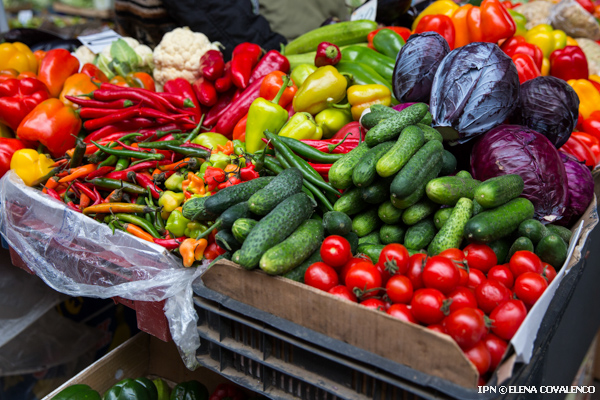
“Life Tree” volunteer Elena Andreiciuc said the event showed how organic fertilizers can be obtained from food waste. As many as 960 kg of food waste were collected and recycled in the course of a year. About 190 kg of ecological greens, such as onion, parsley, salad, radish, tomatoes, spinach and rucola leaves were cultivated with the obtained bio-humus.
The project Intelligent Agroecology in the City was implemented by the public association “Life Tree” in partnership with the Association of Parents with Mentally Undeveloped Children “Hope and Health” with the financial support of the Small Grants Program of the Global Environment Facility implemented by UNDP.