The mass media in Moldova in the period between May 3, 2014 and May 3, 2015 didn’t make progress and even witnessed regression in parts. The international rankings placed Moldova among the countries with partially free press. In an electoral year, the old problems became more evident, namely the political bias of many influential media outlets that advantaged or disadvantaged particular election contenders, neglecting thus the legal norms and professional deontology norms. Such conclusions are contained in the memorandum on the freedom of the press in Moldova, which was presented in a news conference at IPN on the occasion of the Press Freedom Days 2015. This year’s events are held under the slogan “The press and the people demand: Stop corruption!”.
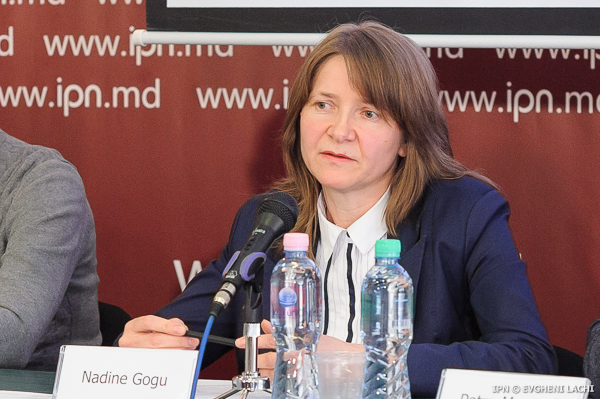
Nadine Gogu, director of the Independent Journalism Center (IJC), said the mass media remain excessively politicized, while the new members of the Broadcasting Coordination Council and the Supervisory Boards of the National Public Broadcaster “Teleradio Moldova” and the Regional Public Broadcaster “Gagauziya Radio Televizionu” continue to be chosen based on political criteria. The problem of limited access of journalists reporting from Parliament remains unsolved.
Nadine Gogu noted that the danger of mass media concentration persists in 2015 given that the analogue terrestrial television is to be replaced by digital one. The roadmap for the transition to digital terrestrial television was approved by the Government only on April 22, 2015, though Moldova pledged to complete the switchover by June 17, 2015. Experts anticipate that the new digital licenses could be issued to the same politicians who now own the most influential media outlets.
The memorandum says that the phenomenon of media politicization in an electoral year exceeded all the limits. As in the period of the Communist government, clear attempts were made by politicians in the period to politically control the media. Nadine Gogu added that the journalists reporting from Parliament had limited access to information. The journalists’ access to the plenary sittings of Parliament was restricted. The representatives of the media were offered a small hall with two monitors, but the information broadcast through them is selected and filtered out by specialists from Parliament.
Civil society from the mass media sector recommends the government to fully realize the important role played by the media outlets in building a democratic state, in accordance with the European standards. The authorities must implement without delay the provisions concerning the mass media included in the Government’s plan of action for 2015-2018 and must create decent working conditions for the journalists reporting from Parliament. The authorities are requested to ensure the security of the information area and to adopt a new Broadcasting Code that would contain a modern, European view.
The government is also recommended to ensure the real independence of the Broadcasting Coordination Council and of the Supervisory Boards of the public broadcasters, to take concrete and efficient measures to make sure that the transition to digital terrestrial television is for the benefit of the people, not of those who want to monopolize the broadcasting sector and to efficiently communicate with journalists and media outlets.