Only a part of the public money go through the public procurement process. Most of the acquisitions are fragmented in order to avoid the stages being followed, as the law provides. The way the public procurement contracts are distributed is partially transparent and these contracts are published with deviations and significant delays. The findings were made public by Transparency International Moldova after monitoring the policy to promote transparency and responsibility in managing public finances pursued by 20 central public authorities.
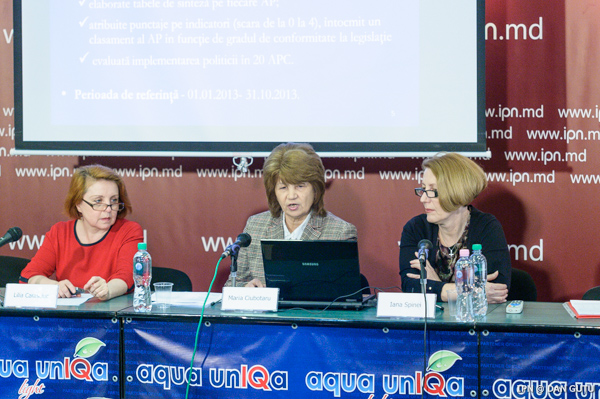
In a news conference at IPN, study author Maria Ciubotaru said the websites of the authorities include different categories of information, but are not organized in an accessible manner enabling to follow the whole public procurement process. The public procurement planning process is non- transparent in half of the monitored authorities. In order to ensure the transparency of public procurement, experts of Transparency International Moldova recommend implementing the automated information system State Public Procurement Register with a view to reviewing the acquisition planning process and hammering the division into small contracts. Disciplinary punishment should be introduced for those who break the law.
All the 20 central public authorities monitored ensured a low level of transparency and responsibility in implementing the recommendations of the Audit Office. Only two disciplinary punishment cases were identified, at the Ministry of Foreign Affairs and European Integration and at the Ministry of Transport and Road Infrastructure. The other authorities said nobody was penalized for the faults identified by the Audit Office. According to the study author, this is because the disciplinary punishment is imposed within six months of the commission of the irregularity. “Usually, the Audit Office decision is published after this term so that nobody will be penalized disciplinarily for the deficiencies found by the Audit Office during external auditing at public authorities,” said Maria Ciubotaru.
However, the monitoring revealed four cases of criminal punishment based on the findings of the Audit Office – one case at the Ministry of Culture and three cases at the Ministry of Education. In this respect, the monitoring authors recommended the central public authorities to create special informative sections on their websites and to disciplinarily punish those who committed the identified irregularities.
Maria Ciubotaru also said that in one third of the cases, there was performed no internal audit, while the results of the carried out audits weren’t published. The authorities are urged to organize internal audits, including financial ones, and to implement their recommendations.
The monitoring of the central public authorities was performed within the project “Monitoring the implementation of anticorruption policies in the CPAs” that is financed by Soros Foundation Moldova.