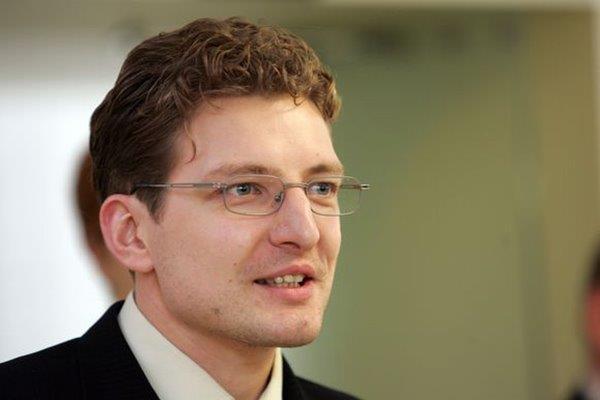
Propaganda alone is not a problem. The problem appears when “brainwashing” happens. There is also positive propaganda, such as propaganda on human rights, gender equality, etc. This type of propaganda doesn’t involve risks, unlike propaganda based on lies, hatred, or call to hatred, war. This is the opinion of Lithuanian Journalists Union Dainius Radzevičius.
During a discussion in Vilnius with a group of journalists from Chișinău, the journalist said that manipulation through propaganda can be fought through education, culture, and personal development.
Lithuania is still subject to propaganda, says Dainius Radzevičius, but it doesn’t have a great influence. However, the manipulation effect is stronger for some people, usually individuals over 50 years of age. They aren’t necessarily nostalgic towards Soviet times, but rather lack proper education. We refer to people who have read their last book in school, who lack any particular interest, don’t know any foreign languages. They only speak Lithuanian and Russian, and watch only Lithuanian and Russian TV. They don’t speak English, French, German. They can’t diversify their sources of information. In their cases, propaganda has a negative effect.
The journalist provided the example of Russian propaganda. According to him, the policy promoted by the Russian Federation is to fight foreign states’ economies and social order, striving to promote its values and destroy others in the process. In his opinion, this type of propaganda can be fought through education, culture, personal development. “People who close themselves within a small informational, cultural, and social ghetto have a hard time in understanding democratic principles, the free market, tolerance, and other values. They usually limit themselves to dictatorship principles, and don’t need democracy. The challenges in this case is to keep the number of such people as low as possible, so they come to understand what democracy means,” the Union President noted.
Refering to the Lithuanian journalist community, Dainius Radzevičius said that there are several journalist communities, and the union he heads entails about one thousand members - freelance journalists, or contract-based agency employees. There is a solidarity in the field, especially on key subjects such as the adoption of important Laws, or when certain publishers are under pressure. Dainius Radzevičius brought up an example that had occurred four years before. The Special Investigations Service launched an investigation into the media leak on certain actions against Lithuania, on behalf of the Russian Federation, by shaming certain politicians, including the Lithuanian President. The agency was being pressured to divulge the name of the informer. At the time, journalists from various publishers united and organized a flash mob in front of the Special Investigation Services headquarters, applauding in support of their peers.
Before that case, the Union used to team up with the Special Investigation Services to award journalists who write on corruption, but the contest has since been dropped. According to Dainius Radzevičius, there is no legal base to force a journalist to give out his/her source, except in cases concerning state security, and only after a court has ruled upon it. Otherwise, it is a breach of the journalists Code of Ethics.
“In 1996, when were developing the Code alongside our Swedish colleagues, they told us that the Code of Ethics is an honor code on the relationship a journalist has with the society, while the law is an agreement between politicians and, partially, the society. Laws can change to represent current political will, not necessarily following the right direction. This has been proven in time. The relationship between the journalist and the society stands as the highest values, and the Code stipulates it,” Dainius Radzevičius noted.
The Lithuanian Journalists Union President also referred to his cooperation with Moldova. Recently, as a media expert, he undertook a visit to UTA Gagauzia, part of a project on the development of public television in UTA Gagauzia. He was involved in the development of Bills in the field of media, including in Moldova. Furthermore, the Lithuanian journalist had cooperated with the “Teleradio-Moldova” Supervisory Council. According to him, this joint effort has proven our country’s spirit and will towards change.