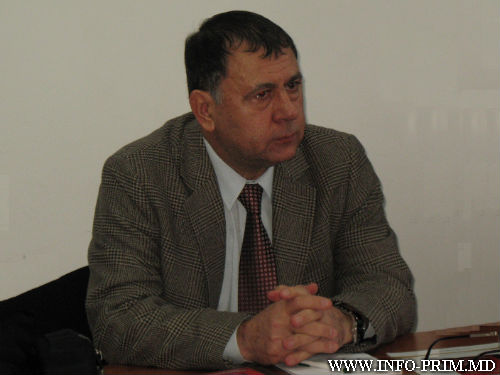
An analysis of the history of the Bolshevik Party and the work of the secret services is available in the book of historian and publicist Ioan Cristian Popa, which was launched in Chisinau. The book “Mechanisms of power of the totalitarian Communist regime in the Bolshevik period (Impact on Bessarabia and Transnistria)” is based on archive documents covering the period between the Bolshevik Revolution of 1917 and 1953, after the death of Stalin and the transit to a new epoch, Info-Prim Neo reports.
The book describes the tragedies through which the citizens of the former USSR went – forced collectivization, destruction of churches and persecution of the intellectual elites.
“In Romania, unlike Moldova, they know less about that period of bolshevism that has characteristic features. Some of them are typical only of the given period, while others continued until contemporariness. This past must be elucidated. We must detach ourselves from it if we want to build a clearer and democratic future. It affects the personality of the people and the collective mentality,” said the author of the book.
According to Ioan Cristian Popa, the work is a combination of the study of the Bolshevik policy, from the original documents and texts of Lenin and Stalin, and a parallel history of the secret services until present, based on achieve documents. “I tried to make a synthesis between the development of the Bolshevik Party and the work of the secret services that served the Bolshevik power. This is the first book and it will have a continuation,” said the author.
Attending the launch, university lecturer, Doctor Habilitate Anatol Petrencu said the work is very important because the author aimed to show the repressive and antihuman character of the Bolshevik regime. “The book contains examples of how the Communists massacred the peasants. The cases of massacre were discussed in Romanian’s Parliament. Western public opinion was sensitized, but the Russians said they were journalists’ insinuations,” said Anatol Petrencu.
“The author describes the most important moments of terror, with emphasis on the Transnistrian region,” said historian Gheorghe Palade. He stated that one of the most important chapters of the book is that about the terror against church, which relates how the churches were destroyed.
The book was launched at the Faculty of History and Philosophy of the State University of Moldova.